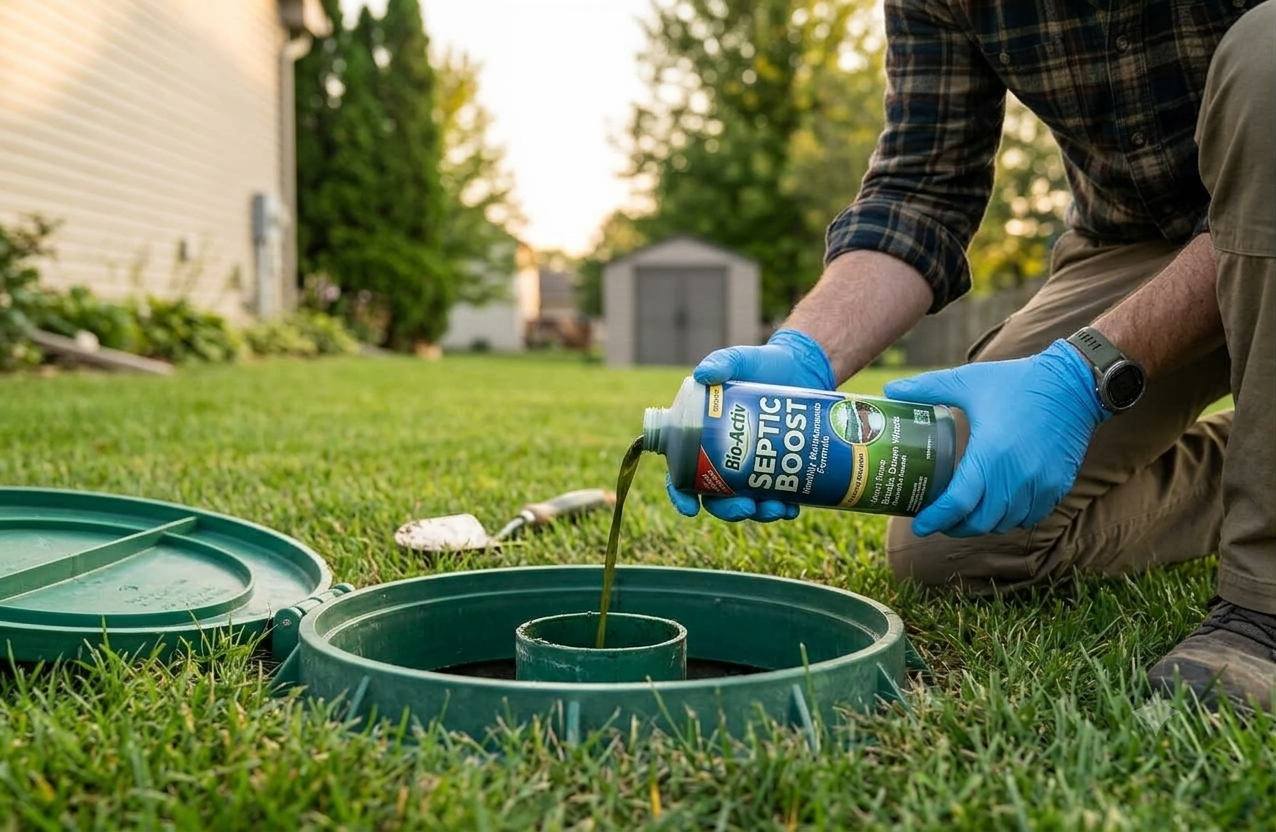
Walk down almost any hardware store aisle, and you will find them: bottles, pouches, and tablets promising to “restore” your septic tank, dissolve sludge, and spare you from ever calling a pump truck again. For twenty dollars, that can sound like a bargain next to a service appointment.
So it is a fair question to ask, especially if you own a home in Delaware or Maryland and want to protect a system you cannot see. Do septic tank additives actually work, and does the science behind them hold up?
The short answer, backed by decades of research, is that a healthy tank does not need the help. Here is what these products claim to do, what studies and the EPA actually found, and what really keeps your system running for the long haul.
What Septic Tank Additives Claim to Do
Additives are marketed to solve problems most homeowners worry about. The typical promises include boosting the bacteria in your tank, breaking down sludge and scum, reducing how often you need to pump, clearing odors, and even reviving a struggling drain field.
They generally fall into three groups:
- Biological additives, containing bacteria, enzymes, or both.
- Chemical additives, containing acids, alkalis, or solvents.
- Enzyme-only products, aimed at specific types of waste.
The pitch sounds reasonable: add more helpers, and your tank works better. The problem is that your septic tank is not actually short on helpers, which is where the science comes in.
What the Science Actually Shows
The research on septic additives is more extensive than most people realize, and the findings have been remarkably consistent across independent studies for decades.
The U.S. Environmental Protection Agency’s guidance is direct: additives are not necessary for a septic system that is properly designed and maintained. The EPA has reported that biological additives do not appear to improve the performance of healthy septic tanks, and that the cost of these products is hard to justify for typical residential use.
University extension research points the same way. One often-cited study examined 48 septic tanks and found no measurable difference in sludge levels between tanks that used bacterial additives and tanks that did not. Controlled field studies have generally failed to show a consistent, lasting benefit.
None of this means the products are a scam in every case. It means that for a normal, working household system, they mostly do nothing you can measure.
Why Your Tank Already Has What It Needs
To understand why additives fall flat, it helps to know how your tank actually works. A septic tank is a living system. The bacteria inside it digest the solids that arrive as wastewater, separating them into a sludge layer at the bottom, a scum layer on top, and liquid effluent in the middle that flows out to the drain field.
Here is the key point: your tank restocks its own bacteria with every flush. Human waste introduces billions of the exact microbes needed to break down waste, day after day. A working tank is never running low.
So pouring in more bacteria is a bit like adding water to a full glass. There is simply nowhere for the extra to do useful work. This is the core reason the science keeps landing in the same place.
Also Read: Common Septic Tank Problems — The real causes of backups, odors, and slow drains, and how to spot them early.
Biological vs. Chemical Additives: A Real Difference
Not all additives carry the same risk, and it is worth being clear rather than alarmist about it.
Enzyme and bacterial products are generally safe. They are unlikely to damage your system. They are also unlikely to help it. Enzymes in particular are very specific: one type breaks down only fibrous material like toilet paper, another only proteins, another only fats. They do not cover the full range of what enters your tank. Enzymes are also not alive and cannot reproduce, so they have to be repurchased and re-added again and again to have any effect at all.
Chemical additives are the ones worth avoiding. Products containing harsh solvents, acids, or compounds like copper sulfate can kill the beneficial bacteria your tank depends on, disrupt the way waste separates, and in some cases harm your drain field or reach groundwater.
There is one more catch. Some biological additives break solids into finer particles. That may sound helpful, but those smaller particles can wash out of the tank and into the drain field, where they clog the soil and shorten its life. That is an expensive problem to fix.
What Additives Cannot Do (and What Actually Helps)
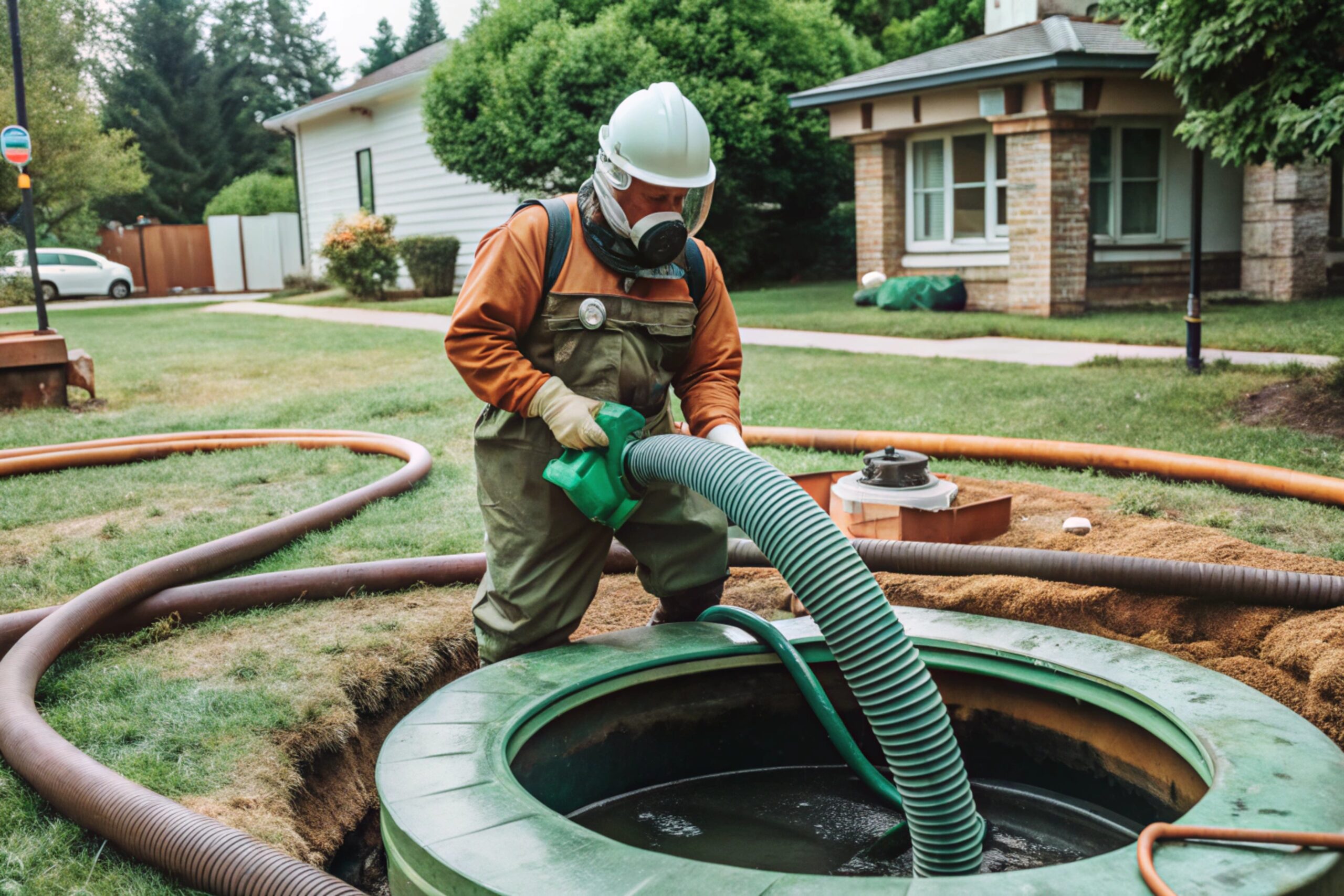
No additive, biological or chemical, can remove the inorganic material that builds up in every tank: grit, sand, and other solids that bacteria cannot digest. That layer keeps growing no matter what you pour in. The only way to physically remove it and reset the tank is to pump it out.
That is why routine septic pumping remains the single most effective thing you can do for your system. For most households, a pump-out every three to five years, based on tank size and how many people use it, protects the drain field and prevents the kind of failure that leads to a full, costly replacement.
Alongside regular pumping service, a few simple habits do more than any bottle on the shelf: keep grease, wipes, and harsh chemicals out of your drains, spread out laundry loads, and address small issues before they grow.
Also Read: Septic Tank Cleaning: 6 Mistakes You Don’t Want to Make — Simple errors that shorten the life of your system, and how to avoid them.
When to Call Septic Masters
If your tank is showing signs of trouble, slow drains, odors, or standing water in the yard, an additive is not the answer. The real cause is usually a full tank, a clog, or a component that needs attention, and that calls for a licensed professional.
As a DNREC Class H certified contractor with more than 42 years of combined experience, we handle honest, thorough septic tank repairs and routine pumping for homeowners across Delaware and Maryland. We diagnose the actual problem, explain it in plain terms, and fix it right, without upselling products you do not need.