Buying land or building a new home in Maryland comes with a question many people do not expect: will the soil actually support a septic system? If your property is not connected to public sewer, the answer starts with a perc test in Maryland. Before the county will approve a septic permit, someone has to prove the ground can safely absorb wastewater.
A perc test is not red tape for its own sake. It protects your investment, your neighbors’ drinking wells, and the local groundwater. It also decides what kind of septic system your lot can support, and how much that system will cost to build.
Here is what a perc test is, why Maryland requires one before septic installation, and how to plan the timing so your project does not stall.
What Is a Perc Test, Exactly?
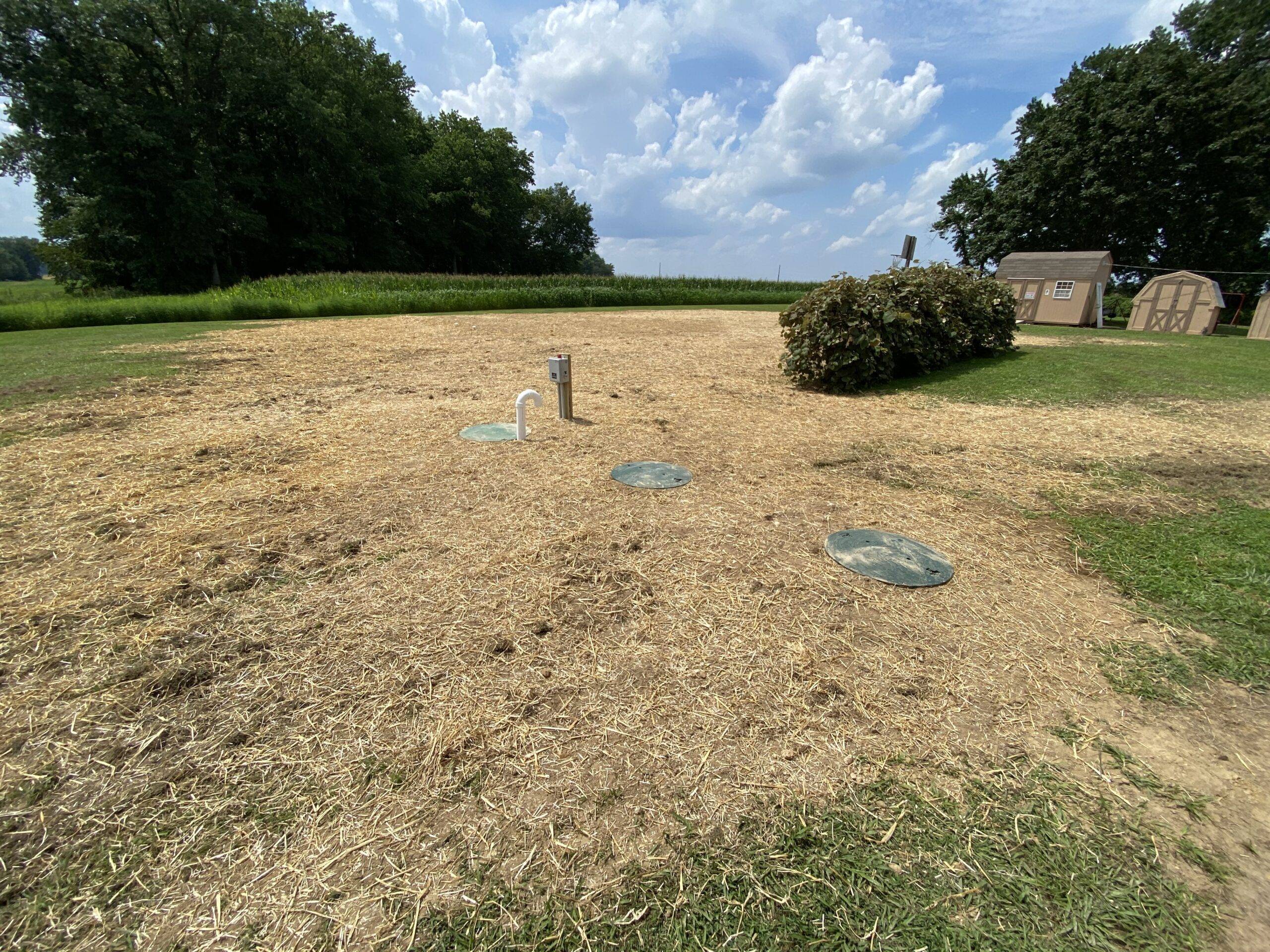
A percolation test, usually shortened to “perc test,” measures how quickly your soil absorbs water in the area where your drain field would go. The drain field, also called the leach field, is the buried network of pipes that releases treated wastewater back into the ground. If the soil there cannot absorb water at a safe rate, the system will not work.
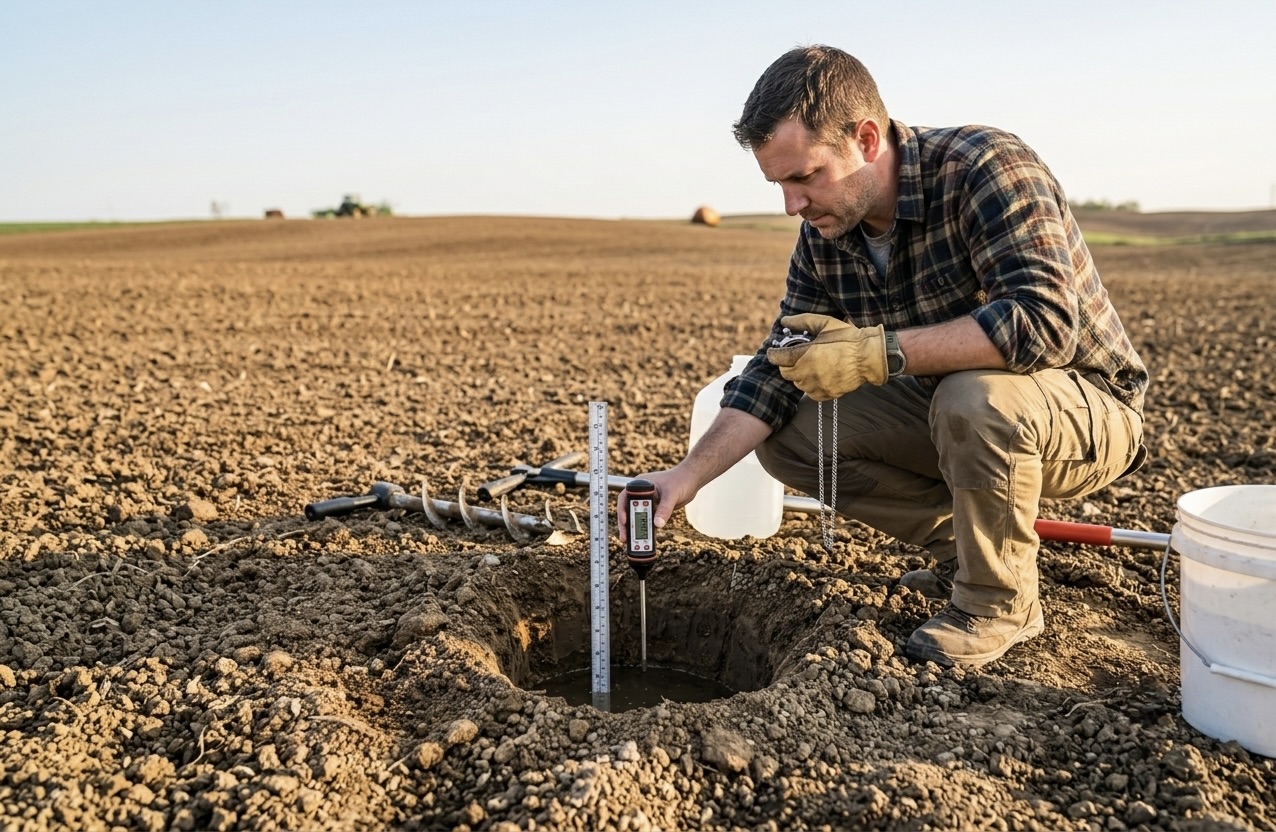
The test itself is straightforward. Holes are dug to the depth your county requires, filled with water, and the rate at which the water level drops is measured. That rate is written as minutes per inch, and it becomes your percolation rate.
A slow rate means water sits in the soil, which can flood a drain field. A very fast rate means wastewater may pass through before it is properly filtered. In most cases a full soil-site evaluation goes along with the perc test, looking at soil type, depth, and how high the water table sits.
Why Maryland Requires a Perc Test Before Septic Installation
In Maryland, the county health department, through its environmental health division, must have a passing perc test and site evaluation on file before it will issue a permit for a new septic system on a property that is not served by public sewer. This requirement is set by state regulation, so it applies across the Eastern Shore and the rest of the state.
There are a few good reasons the rule exists:
- Soil suitability. The test confirms your land can actually treat and absorb wastewater. Not every lot can.
- Protecting groundwater and wells. Poorly absorbed effluent can reach the water table and contaminate nearby drinking wells.
- Right-sizing the system. Your results help determine how large the drain field and tank need to be for your home.
- Planning for the future. Maryland reviews usually require land set aside for a replacement system, so your property is protected years down the road.
In short, the perc test gives everyone a clear, honest snapshot of what your soil can handle before a single pipe goes in the ground.
When Perc Tests Happen in Maryland: Wet Season Timing
This is the part that surprises many buyers. In Maryland, perc tests are usually run during the “wet season,” the time of year when the water table is expected to be at its highest. The rule exists so the soil is evaluated under its most challenging conditions, not during a dry stretch that would make a poor lot look better than it is.
That window generally falls from winter into spring, though the exact dates shift each year based on rainfall and groundwater readings, and can vary from county to county. Testing often pauses once the ground dries out.
The practical takeaway: plan ahead. Perc test applications take time to process, and if you miss the seasonal window, your build can be delayed by months. If you are buying land or scheduling an installation, it pays to start the conversation early.
Also Read: Buying Land: Septic System Installation — What to check before you buy a lot that relies on a septic system.
What Your Perc Results Decide
A perc test is not just pass or fail. Your results shape the entire septic project.
The type of system your lot can support. Fast-draining, well-suited soil may allow a conventional gravity system, which is the simplest and often the most affordable option. Slower or shallower soil, or a high water table, may call for an alternative such as a sand mound septic system or a low-pressure pipe system that spreads wastewater more evenly.
The size of the system. Your percolation rate, combined with your home’s size, determines how much drain field area you need.
The cost of your build. Because the system type and size flow directly from the soil, the perc test has a real effect on your final price. Knowing your results early means no expensive surprises later.
This is exactly why good septic system design starts with solid test data. We build the system around what your soil can actually do, not around a guess.
When to Call Septic Masters
Navigating perc testing, county permits, and system design can feel like a lot, especially when you are also trying to build or buy. That is where we come in. As a licensed septic contractor in Delaware and Maryland, DNREC Class H certified, we help homeowners across the Eastern Shore understand their soil, coordinate with the county health department, and plan the right system from the start.
Whether you are weighing a new lot or ready to move forward, our team handles septic installation across Maryland and the full installation process from evaluation through the finished system. We explain every step in plain terms, so you always know where your project stands.