A smell from your septic system is never something to brush off — but it doesn’t always mean disaster. Most of the time, it’s your system sending a very specific signal. The key is knowing how to read it.
Here’s what many homeowners don’t realize: where that odor shows up tells you almost everything about what’s wrong. A septic tank smell in your house points to a very different set of problems than an odor drifting across your backyard. Treating them the same way leads to wasted time, unnecessary expense, and a smell that doesn’t go away.
This guide breaks down the most common causes of indoor and outdoor septic odors, what each one typically signals, and when the situation calls for a professional. Whether it’s a bathroom drain, a saturated yard after a rainstorm, or a smell that gets worse every summer, understanding the source is always the first step toward fixing it.
Indoor Septic Odors: What’s Causing That Smell Inside Your Home?
When a septic tank smell in your house appears, most homeowners assume the tank itself is the problem. In reality, indoor odors are usually a plumbing issue — not a sign that your septic system is failing. That’s actually good news, because most of the causes are straightforward to diagnose and repair.
Dry P-Traps: The Most Overlooked Cause
Every drain in your home — sinks, showers, floor drains — relies on a curved section of pipe called a P-trap. This U-shape holds a small amount of water that acts as a seal, blocking sewer gas smell from septic lines from rising up into your living space.
When a drain goes unused for two to four weeks or more, that water evaporates. The seal disappears. Gases that should stay underground can now travel freely up through the pipe and into the room. Guest bathrooms, basement floor drains, and utility sinks are the most common culprits.
The fix is simple: run water through infrequently used drains at least once a month to keep the trap full. If the smell appears briefly when water is running — then fades — a partially dry P-trap is almost certainly the source.
Blocked or Damaged Vent Pipes
Your plumbing system includes a vent stack — a pipe that runs through the roof and releases gases safely into the open air. It also equalizes pressure in your drain lines, which is why sinks and toilets flow smoothly rather than gurgling.
When that vent becomes clogged with leaves, debris, a bird nest, or ice in cold weather, gases lose their exit route. The pressure forces them back down through your drains and into the house instead. A blocked vent can affect every fixture in the home at once, which is one way to distinguish it from a single dry P-trap.
Vent pipes can also develop downdrafts in certain weather conditions, pushing gases back toward ground level instead of dispersing them upward. If you’ve noticed odors that seem to correlate with wind or cold fronts, the vent stack is worth inspecting.
Failed Toilet Wax Ring or Loose Seals
At the base of every toilet is a wax ring that creates an airtight seal between the toilet and the drain pipe beneath it. Over time, this ring can dry out, crack, or shift — especially if the toilet rocks even slightly. When it fails, sewer gas smells from septic lines escape directly into the bathroom.
If the odor in your home is concentrated in one specific bathroom, and especially near the base of the toilet, a failing wax ring is a likely cause. Replacing it requires removing the toilet, setting a new ring, and reseating the fixture. It’s a job for a licensed plumber, but a relatively quick repair once the diagnosis is confirmed.
Loose cleanout access plugs are another overlooked source. Found in basement drain lines, a plug that isn’t fully seated allows gas to escape continuously into the space below your home.
A Full Tank Backing Up Into Your Plumbing
If the septic tank itself is overdue for pumping, the tank fills past its functional capacity. Solids that should remain settled begin to move toward the outlet. The system can no longer accept new wastewater at a normal rate, which creates backpressure throughout the plumbing.
That pressure pushes gases back through every connected drain in the house. You may notice slow-draining fixtures alongside the odor, or even gurgling sounds from toilets when sinks are used. When the smell is widespread — affecting multiple rooms at once — and your tank hasn’t had professional septic pumping in three to five years, this is the most likely explanation.
Is Septic Tank Odor in the House Dangerous to Breathe?
Yes — under the right conditions, it can be. Most brief, faint odors from a dry trap or momentary vent disruption don’t pose a significant health risk. But a persistent sewer gas smell from septic lines indoors is a different situation and shouldn’t be treated casually.
What’s Actually in Sewer Gas?
Septic gases are a mixture of several compounds produced by the anaerobic breakdown of organic waste. The most concerning are hydrogen sulfide, ammonia, methane, and carbon dioxide.
Hydrogen sulfide is the primary concern for homeowners. According to the Wisconsin Department of Health Services, even low-level exposure to H₂S can cause eye and respiratory irritation, coughing, and headaches. At higher concentrations, it becomes more dangerous — and critically, it can impair your sense of smell, meaning you may stop noticing the odor before the exposure becomes serious.
When Should You Be Concerned About Indoor Exposure?
Occasional faint odors — especially from an easily identified source like a dry guest bathroom drain — are manageable. If the smell is strong, consistent, or affects multiple rooms, treat it as urgent. Open windows to ventilate the space, avoid using open flames near the source, and call a professional promptly.
Methane’s flammability makes it particularly hazardous indoors. Even if hydrogen sulfide levels aren’t dangerous, the accumulation of combustible gas near ignition sources creates a real risk. A lingering septic tank smell in the house that you can’t resolve with a simple P-trap fix warrants a full plumbing and system evaluation.
Outdoor Septic Odors: What’s Happening in Your Yard?
An odor in your yard or near the septic tank area signals a different kind of problem — one that’s more directly related to the tank or drain field itself. A well-maintained system should be essentially odorless outside. When smells appear, something in the physical structure or function of the system has changed.
A Full or Overloaded Tank
The most frequent cause of outdoor septic odor is a tank that’s overdue for pumping. As solids accumulate past one-third of the tank’s capacity, the system loses its ability to separate waste properly. Gases that would normally be contained begin escaping through the tank lid, vents, or the drain field above. If the odor is concentrated near the tank location, and your system hasn’t been serviced in several years, professional septic pumping is typically the most immediate fix.
Cracked Lid, Damaged Risers, or Loose Manhole Covers
Septic tank lids and risers are designed to seal gases inside. Older concrete lids, in particular, can shift over time or develop hairline cracks that allow odors to escape directly into the surrounding area. Plastic lids are more durable but can be dislodged or cracked by equipment or root pressure.
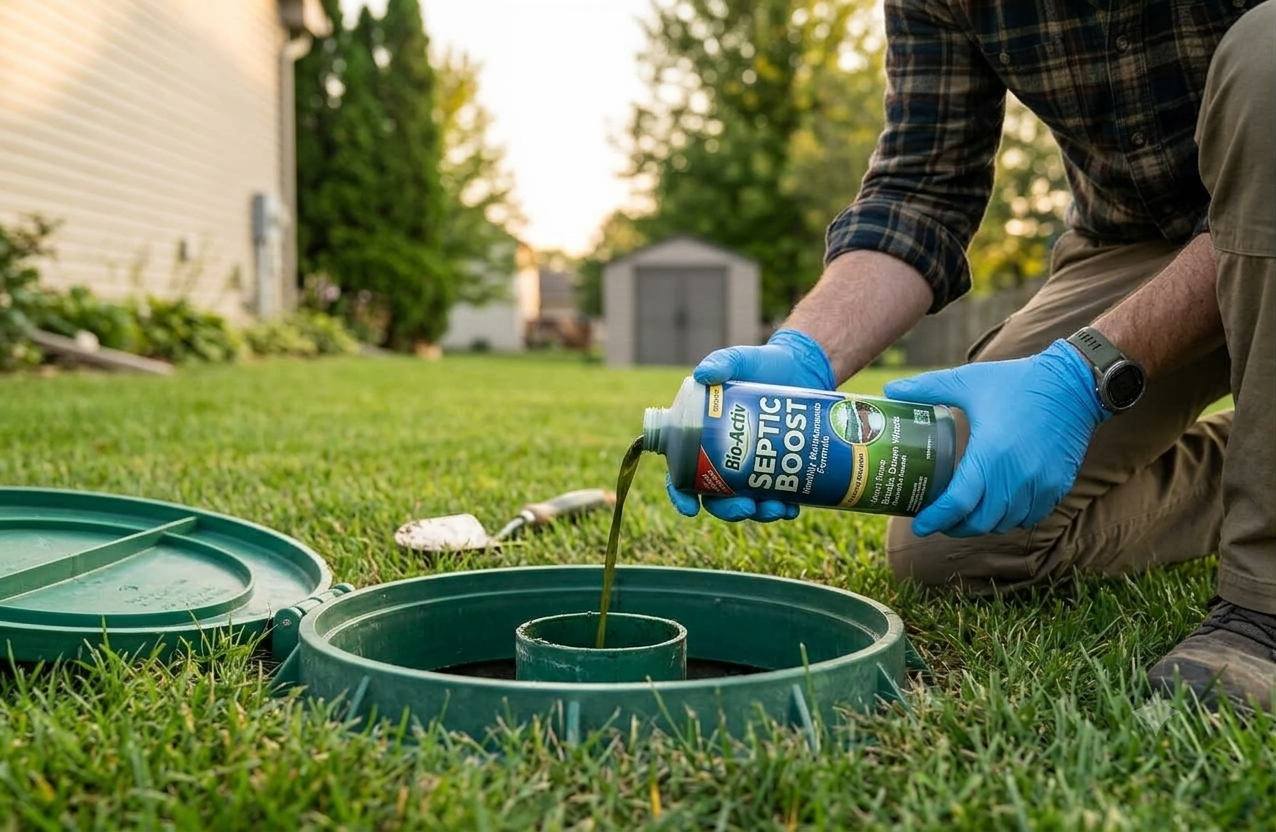
Inspect the access lid and any visible risers for secure fit and visible damage. A cracked concrete lid can be temporarily sealed with weather stripping until proper septic tank repairs can be completed. Replacing an old concrete lid with a modern sealed plastic riser often eliminates recurring outdoor odors entirely.
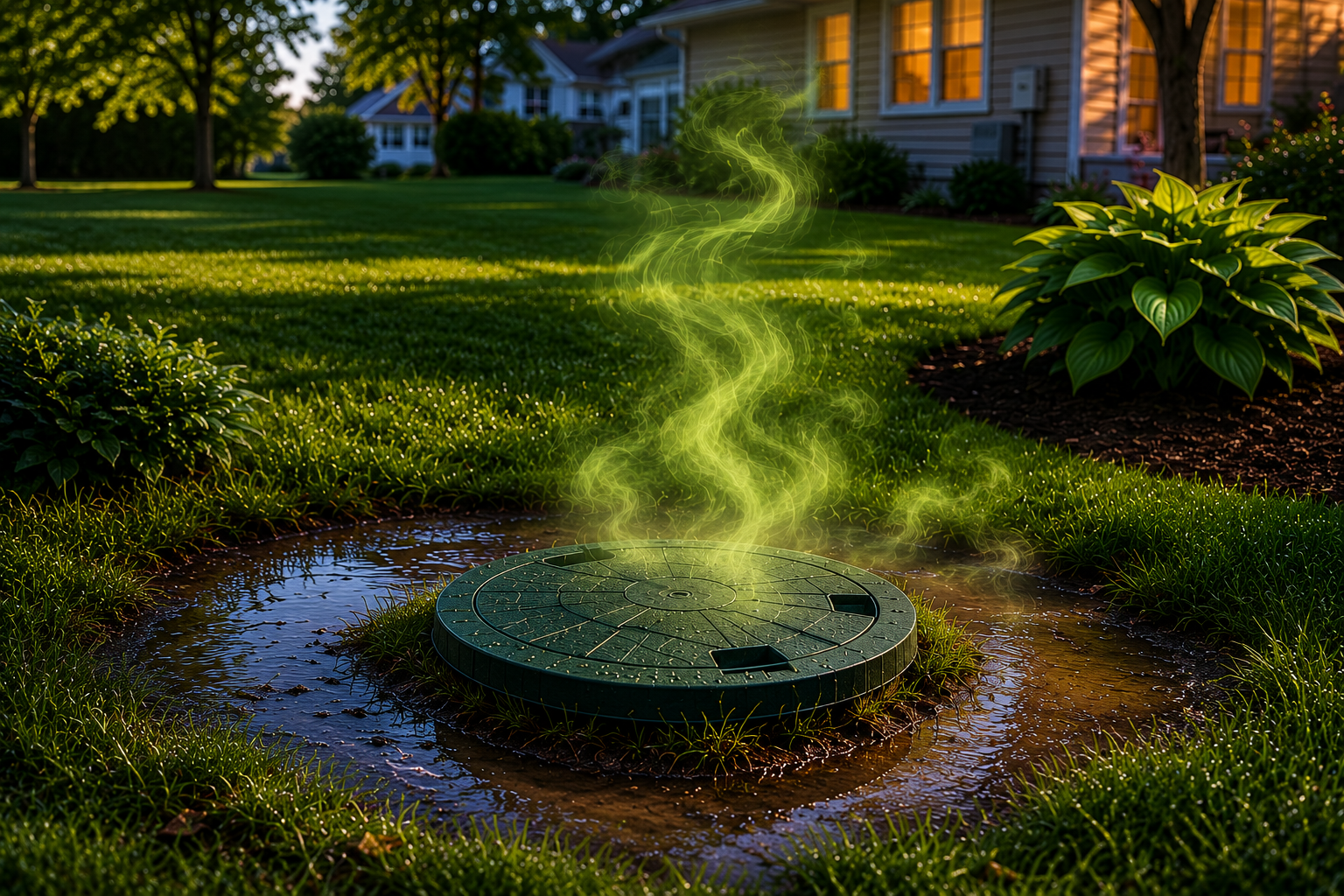
Watch for the warning signs inspectors look for — unusually green grass over the tank area, soft or spongy ground, and standing water near the drain field are often present alongside lid or structural issues.
Drain Field Problems and Soil Saturation
If the odor is concentrated over the drain field rather than near the tank, the leach field itself may be compromised. When the drain field can no longer absorb and treat effluent at the rate it’s being produced, partially treated wastewater moves toward the surface — bringing its odor with it.
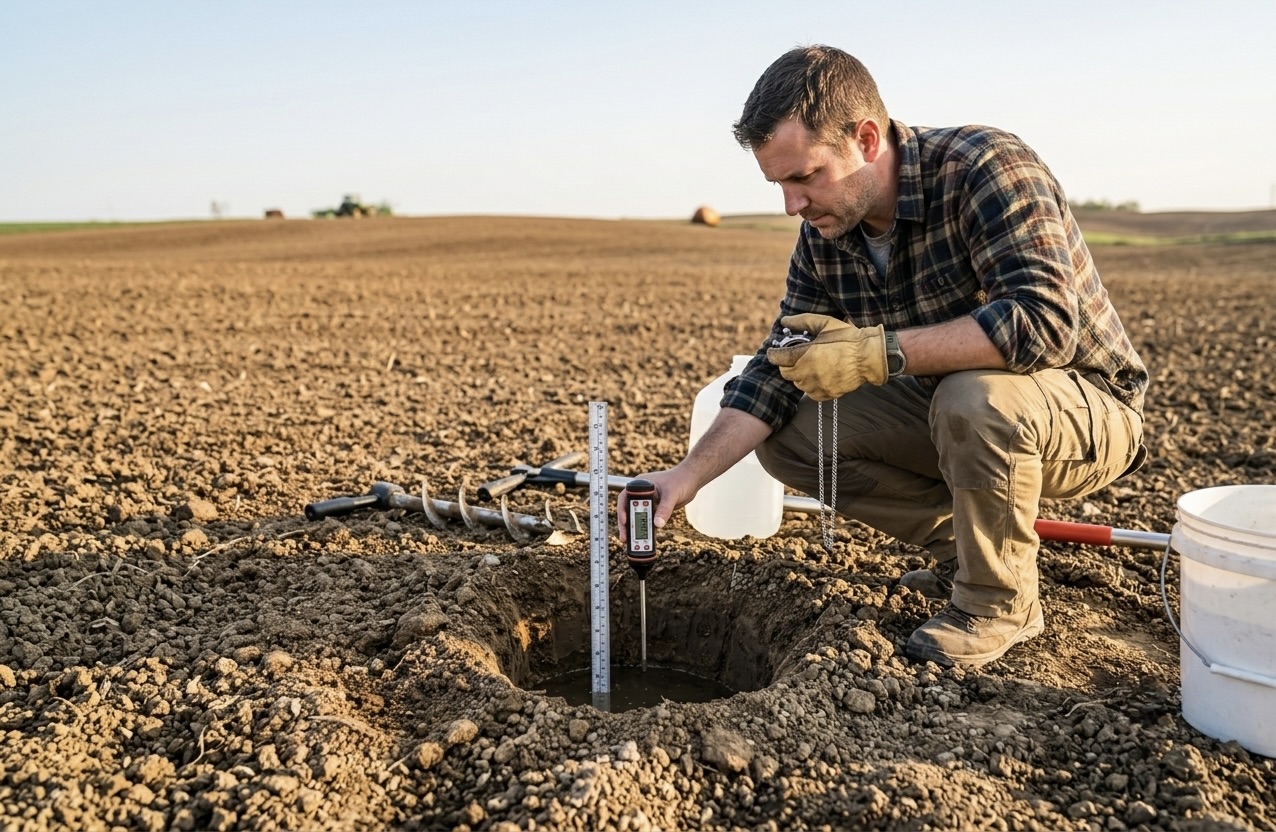
Common causes include biomat buildup (a layer of organic material that clogs soil pores), years of excessive water use, and physical damage from vehicle traffic or tree roots. Maintaining drain field health with regular inspections and appropriate use is far less expensive than the alternative. A failing drain field, if ignored, can cost $5,000 to $20,000 or more to repair or replace.
Why Does My Yard Smell Like Septic After It Rains?
This is one of the most common questions Delaware and Maryland homeowners ask — and it has a clear explanation once you understand how rain interacts with the system.
How Heavy Rain Overwhelms the Drain Field
The drain field works by allowing treated wastewater to percolate slowly through the surrounding soil. That soil needs to have room to absorb. After significant rainfall, the soil around the drain field becomes saturated, and that capacity disappears.
When groundwater rises, and the soil is already at or near full saturation, the system has nowhere to send new effluent. Gases that would normally dissipate underground instead push upward toward the surface, producing the strong outdoor odor that often appears within hours of a heavy rain event. The smell typically fades as the ground dries — but repeated episodes signal that the system is being regularly overwhelmed.
Excess water from roof gutters, grading that slopes toward the drain field, and heavy clay soils (common throughout parts of Delaware and Maryland’s Eastern Shore) all make post-rain odors more likely.
Vent Pipe Downdrafts and Pressure Changes
Rain often comes with barometric pressure shifts and wind pattern changes. These conditions can create downdrafts in the plumbing vent stack — pushing gases back down toward the house and yard rather than allowing them to disperse into the air above the roofline. Homes in low-lying areas, valleys, or surrounded by dense tree cover are more vulnerable to this effect.
If the odor appears to come from near the house rather than the drain field, and especially if it enters through windows or outdoor vents, a downdraft may be at play. A plumber can extend the vent pipe to improve dispersion or install a carbon filter to neutralize gases at the exit point.
What Persistent Post-Rain Odor Usually Means
A single post-storm odor event that clears within a day or two is usually a temporary saturation issue. When it happens consistently after any significant rain — or when the smell lingers for more than 48 hours — the system needs professional evaluation. This pattern often indicates that the drain field is operating near or beyond its capacity, or that the tank’s solids levels are high enough to send excess material into the field.
Reducing water use during and immediately after heavy rain gives the system room to recover and helps prevent odors from intensifying.
Why Does My Septic System Smell Worse in Summer?
If your system has been relatively odor-free in cooler months and seems noticeably worse during summer, temperature is a significant factor — and one that interacts with several other conditions at once.
Heat Accelerates Bacterial Activity and Gas Production
Septic tanks rely on anaerobic bacteria to break down waste. Warmer temperatures accelerate this biological process. When the rate of breakdown speeds up, gas production increases proportionally — more hydrogen sulfide, methane, and ammonia are produced in less time. In hot weather, those gases also expand and escape more readily through any available gap in the system.
This is why a tank that smelled fine in March might be noticeably unpleasant by July, even without any change in household habits or system condition.
Increased Household Water Use in Warm Months
Summer brings more demand on the septic system: more laundry, more frequent showers, outdoor entertaining, and in some households, the addition of guests. More water flowing through the system in a short time can disrupt the bacterial balance in the tank and reduce the time effluent spends being treated before moving toward the drain field.
An already-full tank handles this seasonal surge poorly. The result is more gas, more pressure, and more odor — indoors and out.
Summer Tips to Keep Odors Under Control
Spacing out high-water-use activities helps — run the dishwasher and laundry on separate days rather than simultaneously. Avoid harsh chemical cleaners that disrupt beneficial bacteria in the tank. Keep the tank on its regular pumping schedule of every three to five years; a tank that enters summer at capacity will not perform well under seasonal pressure.
If your system smells noticeably worse each summer despite reasonable maintenance, schedule a septic system inspection before peak season. Catching a developing issue in spring is significantly less costly than addressing it after it progresses.
How to Get Rid of Septic Odor in Bathroom Drains
When the smell is localized to a bathroom drain specifically, the solution is often simpler than homeowners expect. The steps below address the most common causes in order of likelihood.
Quick DIY Fixes That Actually Work
Run water through unused drains. If the odor is in a guest bathroom or basement, pour a cup of water down every drain, including the floor drain if there is one. This refills the P-trap seal. Repeat monthly in spaces that don’t get regular use.
Baking soda maintenance. Pouring about a cup of baking soda down any drain once a week helps maintain a neutral pH level in the lines connected to your septic system. The tank’s beneficial bacteria function best in a pH range of 6.8 to 7.6. When the pH drifts too acidic, hydrogen sulfide production increases noticeably.
Check the toilet base. Kneel near the toilet and check whether the smell intensifies near the floor. A failing wax ring releases odor specifically from the toilet-to-floor junction. If the toilet rocks at all when you sit on it, the wax ring is likely displaced and should be replaced by a plumber.
Improve bathroom ventilation. In bathrooms with poor airflow, gases that enter through minor gaps can accumulate. Running the exhaust fan consistently — especially during and after showers — helps keep concentrations low.
When the Problem Goes Beyond a Simple Fix
If the odor persists after addressing P-traps, ventilation, and toilet seals, the issue likely involves the vent stack or the septic tank itself. A licensed professional can perform a smoke test — introducing smoke into the drain lines to identify exactly where gases are escaping. This diagnostic tool quickly locates leaks, loose joints, and failed seals that aren’t visible to the eye.
A tank that’s full, structurally damaged, or biologically imbalanced won’t respond to drain-level fixes. In those cases, addressing the source directly — through pumping, repair, or inspection — is the only effective solution.
Conclusion
Septic odors are almost always trying to tell you something specific. Indoor smells — especially in bathrooms or basement drains — usually trace back to dry P-traps, blocked vents, or failed seals. They’re a plumbing problem more often than a septic system problem. Outdoor smells, particularly near the tank or drain field, point to the system itself: a full tank, a compromised lid, or a saturated leach field that’s struggling to do its job.
Rain makes outdoor odors worse by overwhelming the drain field’s absorption capacity. Summer makes both indoor and outdoor odors more noticeable by speeding up gas production and increasing household water demand.
The fastest path to resolution is accurate diagnosis. If you’ve worked through the DIY steps and the smell persists — or if you’re seeing other signs of system stress alongside the odor — it’s time for professional eyes on the system. Septic Masters serves homeowners across Delaware and Maryland with septic inspections, pumping, drain field service, and repairs. If you’re tracking down a persistent odor or want to get ahead of potential issues, schedule a service and let our team help you find the source and fix it the right way.