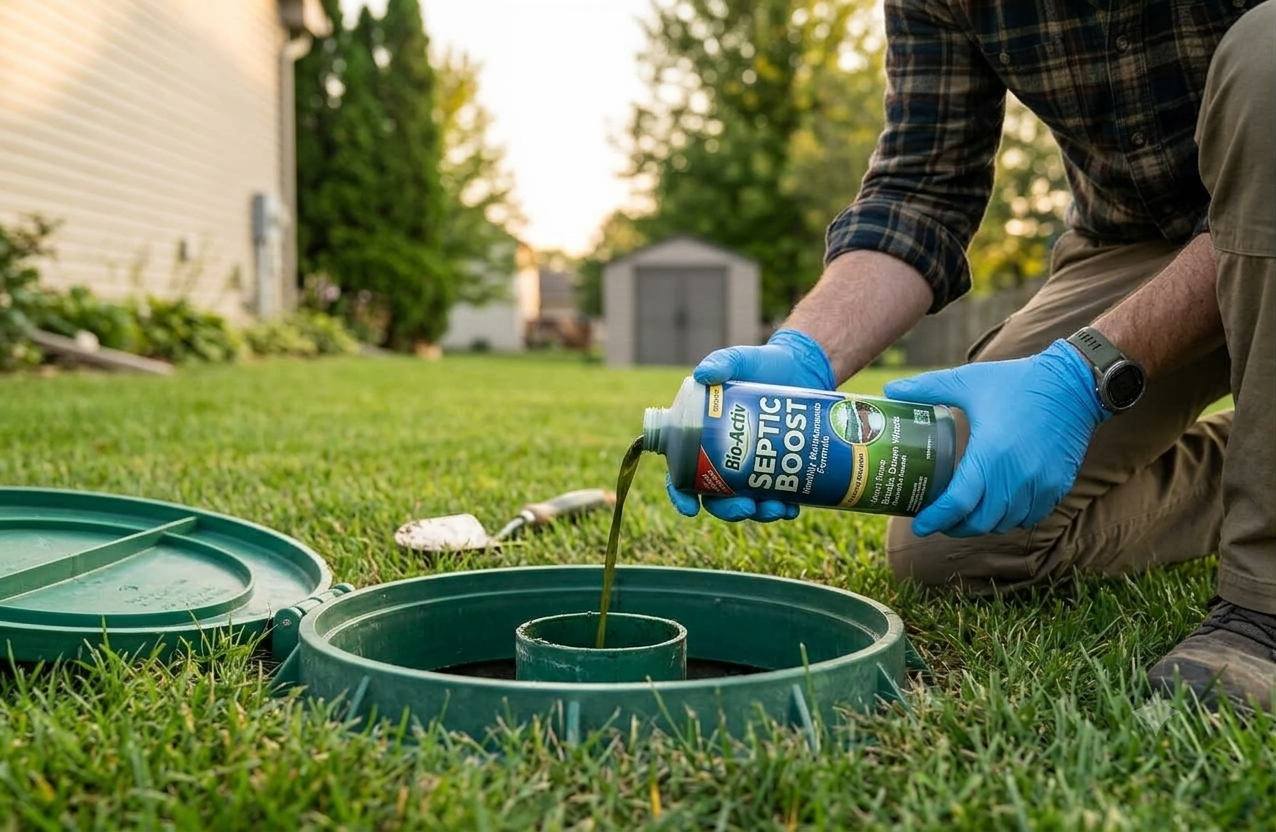

Switching to septic-safe cleaning products doesn’t mean sacrificing a clean home. It means knowing what to look for, what to avoid, and how a few simple swaps can protect a system you depend on every single day. This guide covers all of it.
Why Your Cleaning Products Matter More Than You Think
Here’s something many homeowners don’t realize: your septic tank isn’t just a holding container. It’s a living system. And what you pour down your drains directly affects whether it stays that way.
How a Healthy Septic Tank Actually Works
When wastewater leaves your home, it flows into the septic tank, where solids sink to the bottom and oils and grease float to the top. The layer in the middle, the liquid effluent, is what eventually flows out to your drain field for treatment. None of this works without bacteria. These microorganisms break down solid waste continuously, keeping sludge levels in check and effluent clean enough for the soil to handle. It’s a process that depends entirely on a stable, active bacterial population.
What Happens When the Bacterial Balance Is Disrupted
When harsh chemicals enter the tank, they don’t distinguish between harmful pathogens and the beneficial bacteria your system needs. The result is a depleted bacterial colony — and a tank that starts accumulating solids faster than it can process them. Over time, that leads to clogs, backups, drain field stress, and costly septic tank cleaning or repair work. Understanding common septic tank cleaning mistakes — including using the wrong products — is the first step toward avoiding them.
What Household Cleaners Should You Avoid With a Septic Tank?
Some of the most common products under your kitchen and bathroom sink are quietly working against your septic system. The damage doesn’t happen all at once — it builds up over months and years of regular use.
Chlorine Bleach — A Common Culprit
Bleach is the go-to disinfectant in most households, but it poses a serious risk to septic systems. According to research, as little as two gallons of chlorine bleach can wipe out the functioning bacteria inside a 1,000-gallon septic tank. That’s not a rare worst-case scenario — that’s the result of a few heavy cleaning sessions. Occasional, diluted use is generally tolerable, but regular bleach use in toilets, sinks, and laundry is one of the fastest ways to compromise a septic system’s bacterial balance.
Antibacterial Soaps and Disinfectants
Antibacterial products are designed to kill microorganisms — and they do exactly that inside your tank. Ingredients like methylisothiazolinone (MIT), a synthetic antimicrobial preservative found in many liquid cleaners and soaps, are particularly harmful.
This compound doesn’t just kill surface bacteria — it passes through your plumbing and continues killing microorganisms in your tank. It’s also been flagged as toxic to aquatic life, which matters when your drain field sits near groundwater.
Chemical Drain Cleaners
Drain cleaners are among the most concentrated chemical products a household uses. Many contain high concentrations of bleach or caustic acids specifically formulated to dissolve organic matter — which is precisely what your septic tank’s bacteria are made of. Even products marketed as “septic-safe drain cleaners” should be used sparingly. If you do need one, choose a liquid formula, not foam, and use it only when necessary.
Phosphate-Heavy Laundry and Dish Detergents
Phosphates encourage algae growth inside the tank and in the soil surrounding your drain field, effectively suffocating the beneficial bacteria that keep the system functioning. Many older and budget-brand detergents still contain phosphates. Powder laundry detergents are especially concerning — they often contain fillers and additives that don’t fully dissolve, leading to buildup inside pipes and the tank over time.
How Bleach and Antibacterial Soap Affect Septic Tank Bacteria
When homeowners ask how bleach and antibacterial soap affect septic tank bacteria, the answer comes down to a simple principle: these products don’t know the difference between the bacteria you want dead and the bacteria your septic system needs alive.
The Science Behind Bacterial Die-Off
Chlorine bleach works by oxidizing cell membranes — essentially dissolving the outer wall of microorganisms. That’s effective on a countertop, but inside a septic tank, the same reaction kills the anaerobic bacteria responsible for breaking down waste. Antibacterial agents like triclosan (found in some soaps) and MIT target bacteria at the enzymatic level, disrupting their metabolism. The bacteria in your tank don’t recover quickly. Rebuilding a healthy colony after significant chemical exposure can take weeks or longer — during which time your system is processing waste less efficiently.
How Much Is Too Much?
The concept of “moderation” applies, but it’s easy to underestimate cumulative exposure. A household that uses bleach-based toilet tablets, antibacterial hand soap at every sink, and a disinfecting spray on kitchen surfaces is introducing these chemicals into the system daily. Even small amounts add up. The EPA’s Safer Choice program offers a publicly available list of cleaning products that have been evaluated for environmental and system safety — a reliable starting point when choosing replacements.
The Best Cleaning Products That Won’t Harm Your Septic System
Choosing the best cleaning products that won’t harm your septic system doesn’t require specialty items or expensive eco-brands. Many effective options are already in most homes.
Natural All-Purpose Cleaners (Vinegar, Baking Soda, Borax, OxiClean)
White vinegar, baking soda, and borax are among the most reliable septic-safe cleaners available. They clean and deodorize effectively without disrupting bacterial balance. A mixture of baking soda and vinegar works well for drain maintenance, surface cleaning, and deodorizing toilets.
OxiClean — an oxygen-based cleaner — is generally considered safe for septic systems in normal quantities. These aren’t just “green” choices; they’re practical ones that protect the investment your septic system represents. For more on maintaining your system holistically, see these essential tips for septic system care.
Septic-Friendly Laundry Detergent — What to Look For
The ideal septic-friendly laundry detergent checks four boxes: phosphate-free, non-chlorine, low-sudsing, and biodegradable. Liquid detergents are preferable to powders — they dissolve completely and don’t leave behind filler residue that can accumulate in pipes and tank walls.
Many brands now carry explicit “septic-safe” labeling. If you can’t find that label, look for “biodegradable,” “plant-based,” and “phosphate-free” as your primary indicators. Avoid anything labeled “antibacterial” or “disinfecting” in laundry products.
Toilet Bowl and Bathroom Cleaners
Avoid automatic toilet bowl tablets that contain bleach — they release chlorine continuously with every flush. Instead, opt for plant-based toilet bowl cleaners that specify compatibility with septic systems. For general bathroom surfaces, a diluted white vinegar solution or a plant-based spray cleaner handles most cleaning tasks without threatening your tank’s bacterial environment.
Is Dawn Dish Soap Safe for Septic Systems?
This is one of the most frequently asked questions among homeowners with septic systems — and the answer is nuanced.
What Makes Dawn Relatively Septic-Compatible
Dawn dish soap is generally considered safe for septic systems when used in reasonable quantities. Its formula is biodegradable, meaning it breaks down into natural substances over time rather than accumulating in the tank. Dawn also lacks phosphates and doesn’t carry the “antibacterial” designation that makes other soaps problematic.
Some formulations even contain enzymes that can assist in breaking down organic matter — a mild benefit to the system rather than a harm. The keyword, however, is “reasonable.” Dawn is designed to cut through grease effectively, which means a small amount goes a long way. Using far more than needed pushes more surfactant into the system than its bacteria can comfortably handle.
Septic-Safe Laundry Habits Beyond the Detergent
Detergent choice matters, but it’s only part of the equation. How you do laundry affects your septic system just as much as what you wash with.
Liquid vs. Powder Detergents
The preference for liquid over powder is consistent across septic professionals. Powder detergents contain fillers — often sodium-based compounds — that don’t dissolve fully in the wash cycle. These materials enter the tank and gradually build up, contributing to sludge accumulation and potential clogs. Liquid detergents dissolve completely and introduce far fewer insoluble additives into the system.
Load Size, Frequency, and Water Volume
Doing multiple large loads of laundry in a single day sends a surge of water through your septic system that the drain field may not be able to absorb quickly enough. This can cause temporary saturation and reduce treatment efficiency. Spreading laundry across several days — rather than doing everything on Saturday — gives the system time to process each load before the next one arrives. It’s a small adjustment with a meaningful impact on long-term system health, particularly for households with older or higher-volume systems.
Conclusion
Every flush, every load of laundry, every drain is a small decision that either supports or strains your septic system. The right septic safe cleaning products reduce that strain significantly — but even the best product choices can’t compensate for a tank that hasn’t been properly maintained.
Routine professional septic pumping every three to five years removes accumulated solids before they cause problems. Combined with smarter product choices, it’s the most effective way to extend the life of your system and avoid costly emergency repairs. The top benefits of routine septic tank cleaning go well beyond odor control — they include protecting your drain field, your property value, and your peace of mind. If you’re in Delaware or Maryland and it’s been a while since your last service, the team at Septic Masters is ready to help. Reach out to schedule an inspection or pumping — and keep your system working the way it should.